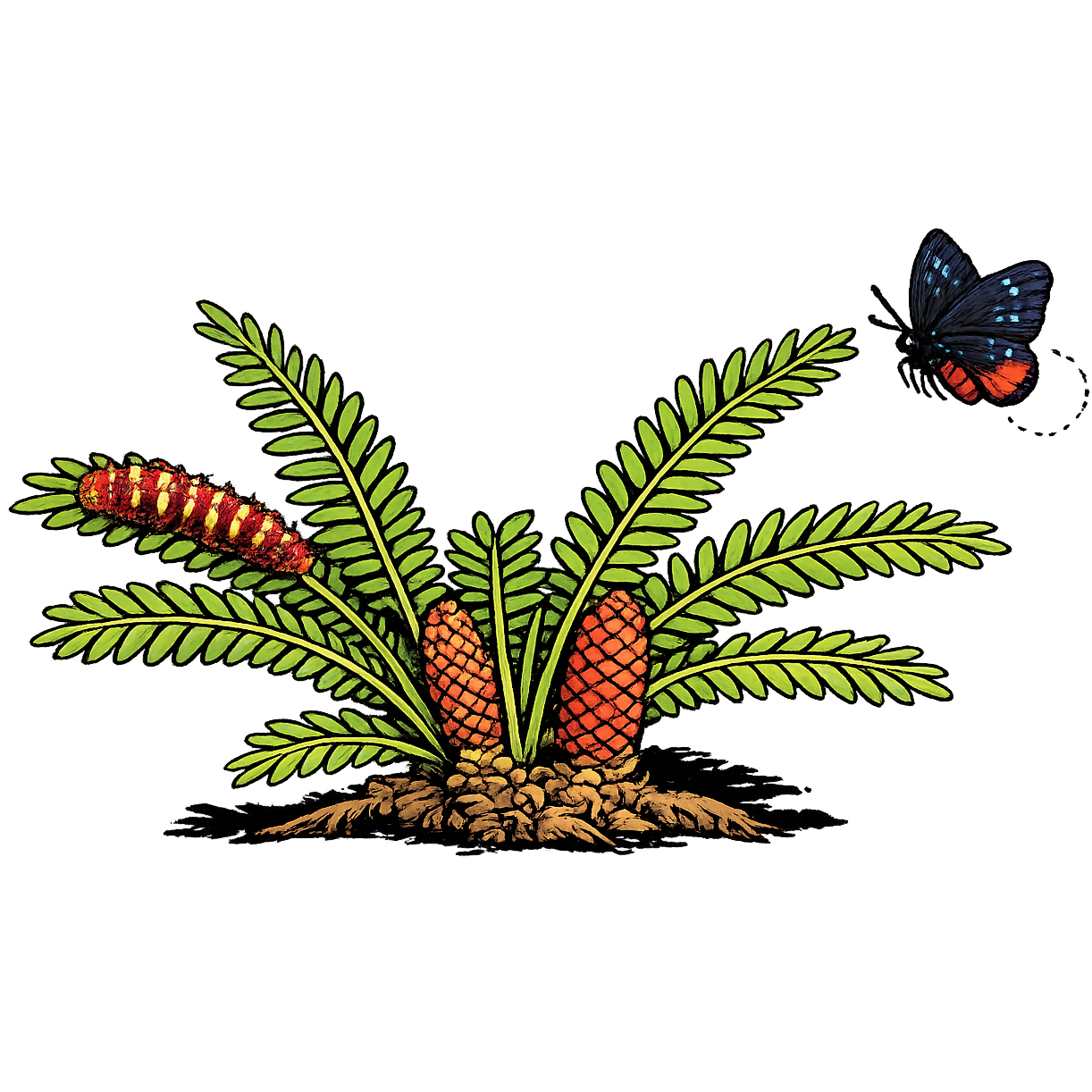
Coontie (Zamia integrifolia) is one of Florida’s most distinctive and historically important native plants. This hardy, low-growing cycad has been part of Florida’s natural landscape for thousands of years, thriving in sandy soils, pine flatwoods, coastal hammocks, and scrub habitats across the state. With its attractive evergreen foliage, exceptional drought tolerance, and deep ecological value, coontie is an outstanding choice for Florida landscapes, especially those designed with native plants in mind.
Despite its palm-like appearance, coontie is not a palm at all. It belongs to an ancient group of plants called cycads, which existed long before flowering plants evolved. In fact, cycads date back to the time of the dinosaurs, making coontie a fascinating living relic of prehistoric plant life. Its scientific name, Zamia integrifolia, refers to the smooth edges of its glossy leaflets, which grow along graceful, arching fronds that emerge from an underground stem.
Coontie typically grows between one and three feet tall and spreads slowly over time, forming an attractive, tidy clump of bright to deep green foliage. Each frond is composed of many small, stiff leaflets that give the plant a clean, symmetrical look. Because the plant’s trunk remains mostly underground, coontie maintains a compact, low profile that works beautifully in landscape beds, borders, and naturalized plantings.
One of the most remarkable features of coontie is its ability to thrive in difficult conditions. It is extremely drought tolerant once established and performs well in sandy or nutrient-poor soils common throughout Florida. Coontie grows well in full sun to partial shade and requires very little maintenance once established. It is also highly resistant to salt spray, making it a good option for coastal landscapes.
Beyond its ornamental appeal, coontie plays an important ecological role. It is the exclusive host plant for the beautiful Atala butterfly (Eumaeus atala), one of Florida’s most striking native butterflies. The butterfly’s brilliant blue-black wings and red markings make it a favorite among gardeners and naturalists. Atala caterpillars feed exclusively on coontie foliage, meaning that planting coontie directly supports the survival of this remarkable species. Adding coontie to your landscape can help create habitat for these butterflies and contribute to local biodiversity.
Historically, coontie also played a significant role in Florida’s human history. Indigenous peoples, including the Seminole and earlier tribes, processed the plant’s underground stem to produce a starchy flour known as Florida arrowroot. Later, in the 1800s and early 1900s, coontie was harvested commercially in South Florida for starch production. Today, wild populations remain protected, and cultivated plants are propagated in nurseries for landscaping and restoration purposes.
In the landscape, coontie works beautifully in native gardens, xeriscapes, butterfly gardens, and naturalized plantings. It pairs well with other Florida natives such as muhly grass, dune sunflower, blanket flower, and native salvias. Because it remains evergreen and maintains a neat form year-round, coontie provides consistent structure and texture in garden beds.
For gardeners looking to create a resilient, wildlife-friendly landscape, coontie is an exceptional choice. Its prehistoric heritage, graceful foliage, and ability to support the Atala butterfly make it one of Florida’s most rewarding native plants to grow. Adding coontie to your yard not only enhances the beauty of your landscape but also helps preserve an important piece of Florida’s natural heritage. 🌿🦋