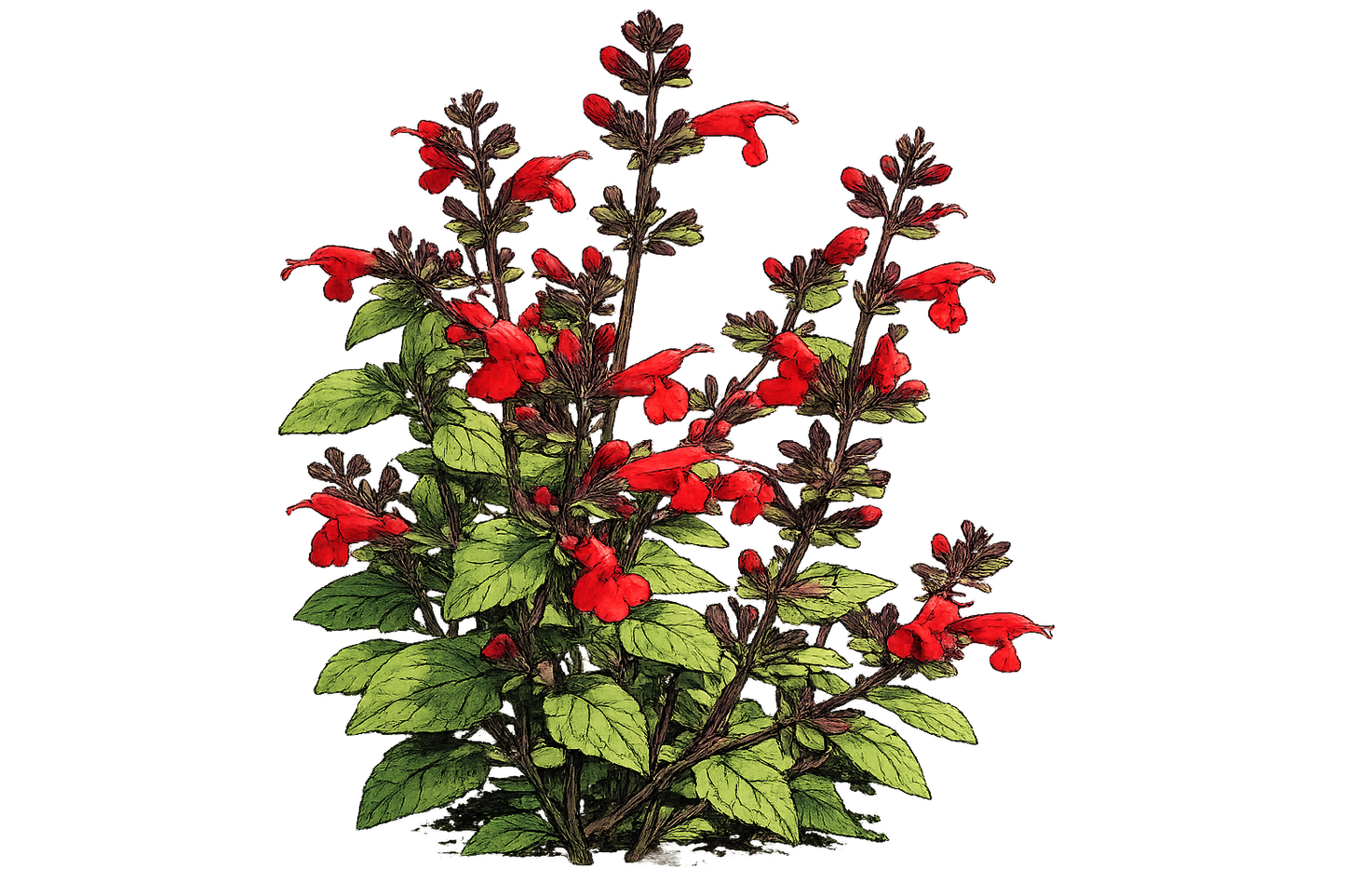
Salvia coccinea (Scarlet Sage) is one of the most reliable and rewarding native wildflowers you can add to a Florida-friendly garden. Known for its vivid red tubular blooms and long flowering season, this easygoing plant brings constant color and movement to beds, borders, and pollinator plantings. Native to the southeastern United States, including much of Florida, Salvia coccinea is well adapted to local conditions and thrives with very little fuss.
From spring through fall—and often year-round in warm climates—scarlet sage produces upright stems covered in bright, nectar-rich flowers. The blossoms are especially attractive to hummingbirds, butterflies, and native bees, making this plant a cornerstone species for pollinator gardens. Its tubular flower shape is perfectly suited to long-tongued pollinators, so you’ll often see hummingbirds darting from bloom to bloom.
In the landscape, Salvia coccinea grows as a small, airy perennial or self-seeding annual, typically reaching 1–3 feet tall. The plant has a natural, meadow-like appearance, with branching stems and soft green leaves that provide a light, informal texture. It fits beautifully into cottage gardens, native plant beds, and naturalized areas, and also works well in containers.
One of the biggest advantages of scarlet sage is how adaptable it is. It performs well in full sun to partial shade and tolerates a wide range of soil types, from sandy to loamy conditions. Once established, it is moderately drought tolerant, though it will bloom more heavily with occasional watering during dry periods. Because it is native, it also tends to be more resistant to pests and diseases than many ornamental exotics.
Scarlet sage is especially valued for its ability to reseed gently. After flowering, the plant produces small seeds that can sprout nearby, creating natural drifts of color the following season. This makes it a great choice for gardeners who want a lively, evolving planting without constant replanting.
Maintenance is minimal. Occasional trimming or deadheading can encourage bushier growth and more blooms, but the plant will perform well even if left alone. In colder areas, it may die back in winter, while in frost-free regions it can behave as a short-lived perennial.
Whether you’re building a pollinator garden, filling in sunny spaces, or adding a splash of red to your landscape, Salvia coccinea is a dependable and beautiful choice. Its long bloom time, wildlife value, and easy care make it a favorite among both beginner and experienced gardeners. At Blue Bee Nursery, our scarlet sage plants are grown with care to help you create a vibrant, pollinator-friendly garden that supports local ecosystems.