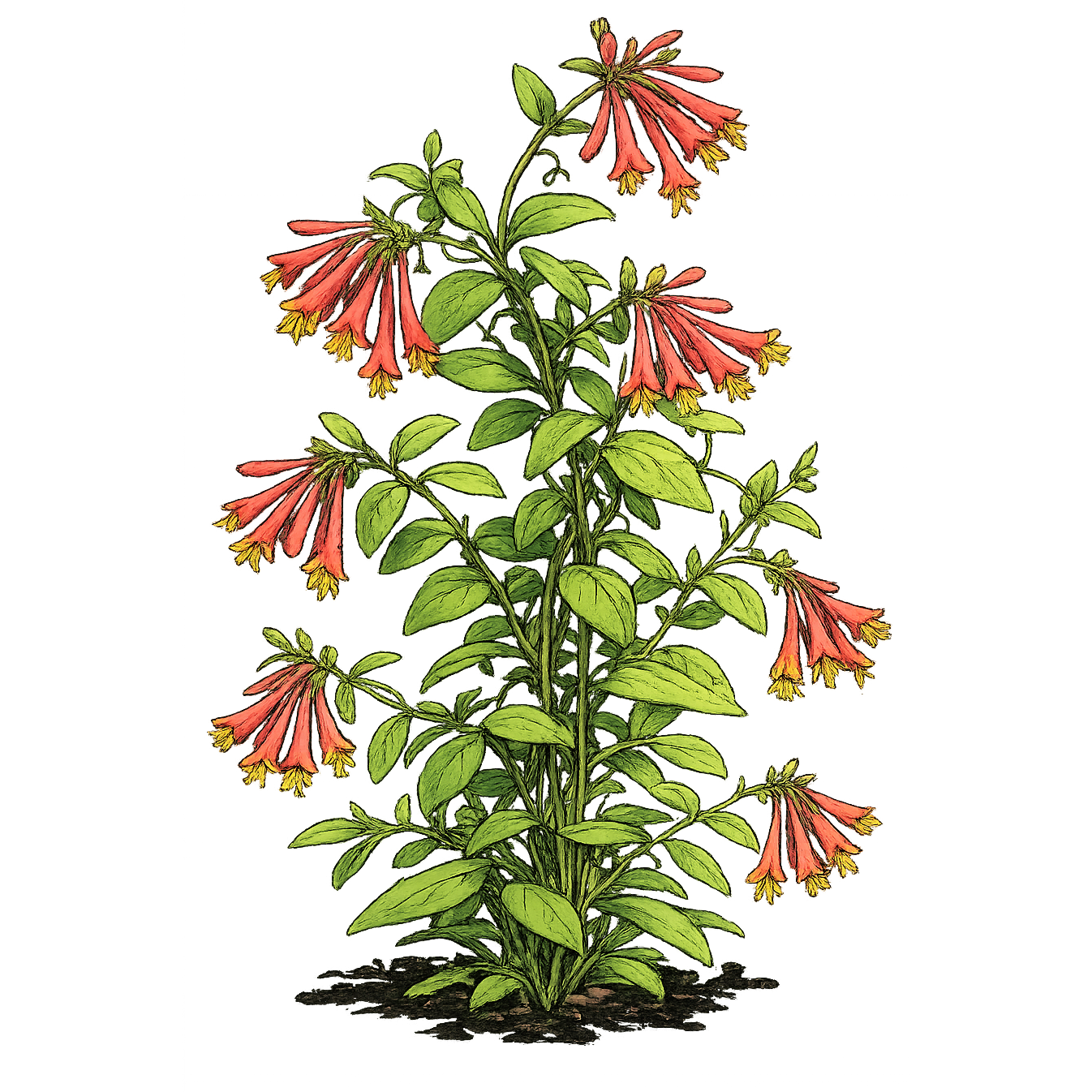
Coral honeysuckle (Lonicera sempervirens) is one of the most beautiful and wildlife-friendly native vines you can grow in a Florida landscape. With its graceful climbing habit and clusters of coral-red, trumpet-shaped flowers, this Florida native plant brings color, movement, and pollinator activity to fences, trellises, arbors, and naturalized garden spaces. Naturally found in woodlands, forest edges, and coastal areas throughout Florida, coral honeysuckle is well adapted to the state’s heat, humidity, and sandy soils.
From spring through summer—and often with lighter blooms into fall—coral honeysuckle produces clusters of long, tubular flowers in shades of coral red with soft yellow interiors. These nectar-rich blooms are a favorite of hummingbirds, butterflies, and native bees. The tubular shape of the flowers is perfectly suited to hummingbirds, making this vine one of the best choices for anyone hoping to attract these energetic pollinators to their yard.
In the landscape, Lonicera sempervirens grows as a twining, semi-evergreen vine that can reach 10–20 feet in length when given support. It can be trained along fences, trellises, or arbors, or allowed to ramble naturally through shrubs and small trees. Its smooth, blue-green leaves provide an attractive backdrop for the bright flowers, and the plant maintains a clean, tidy appearance throughout the growing season.
One of the biggest advantages of coral honeysuckle is its adaptability. It grows well in full sun to partial shade and tolerates a wide range of soil types, including sandy, well-drained soils common in many parts of Florida. Once established, it is moderately drought tolerant and requires very little supplemental watering. Because it is a true Florida native, it is naturally suited to local conditions and is rarely troubled by pests or diseases.
After the flowering season, coral honeysuckle produces small, bright red berries that are attractive to birds. These fruits add another layer of wildlife value, making the plant beneficial for both pollinators and songbirds. The vine may also gently reseed in favorable conditions, helping it naturalize over time.
Maintenance is simple. Provide a support structure for the vine to climb, and water regularly during the establishment period. Once rooted, it needs very little care. Light pruning after the main flowering period can help control size and encourage bushier growth, but the plant will perform well even with minimal attention.
Coral honeysuckle pairs beautifully with other Florida native plants such as goldenrod, milkweed, coreopsis, and native grasses. Its climbing habit adds vertical interest to pollinator gardens and helps soften fences and structures with natural color and texture.
Whether you’re creating a hummingbird garden, adding a flowering vine to a trellis, or building a wildlife-friendly landscape, coral honeysuckle is a dependable and rewarding choice. At Blue Bee Nursery, our Lonicera sempervirens plants are grown with care to help you create a vibrant, pollinator-rich garden rooted in Florida’s natural beauty.